If you want to become highly effective in sales, fundraising, or leadership, there is one skill that separates the top performers from everyone else.
It isn’t just strategy.
It isn’t just expertise.
And it certainly isn’t talking more.
The real difference is this:
They understand people.
Not just what people say.
Not just what people do.
They understand how people think and what motivates their decisions.
Because here’s the truth most professionals eventually discover: the exact same message can produce completely different responses depending on who is hearing it.
One person may say yes immediately.
Another may hesitate.
Another may ask for more information.
And another may disengage entirely.
That doesn’t mean the message was wrong.
It means the message wasn’t aligned with how the person processes information.
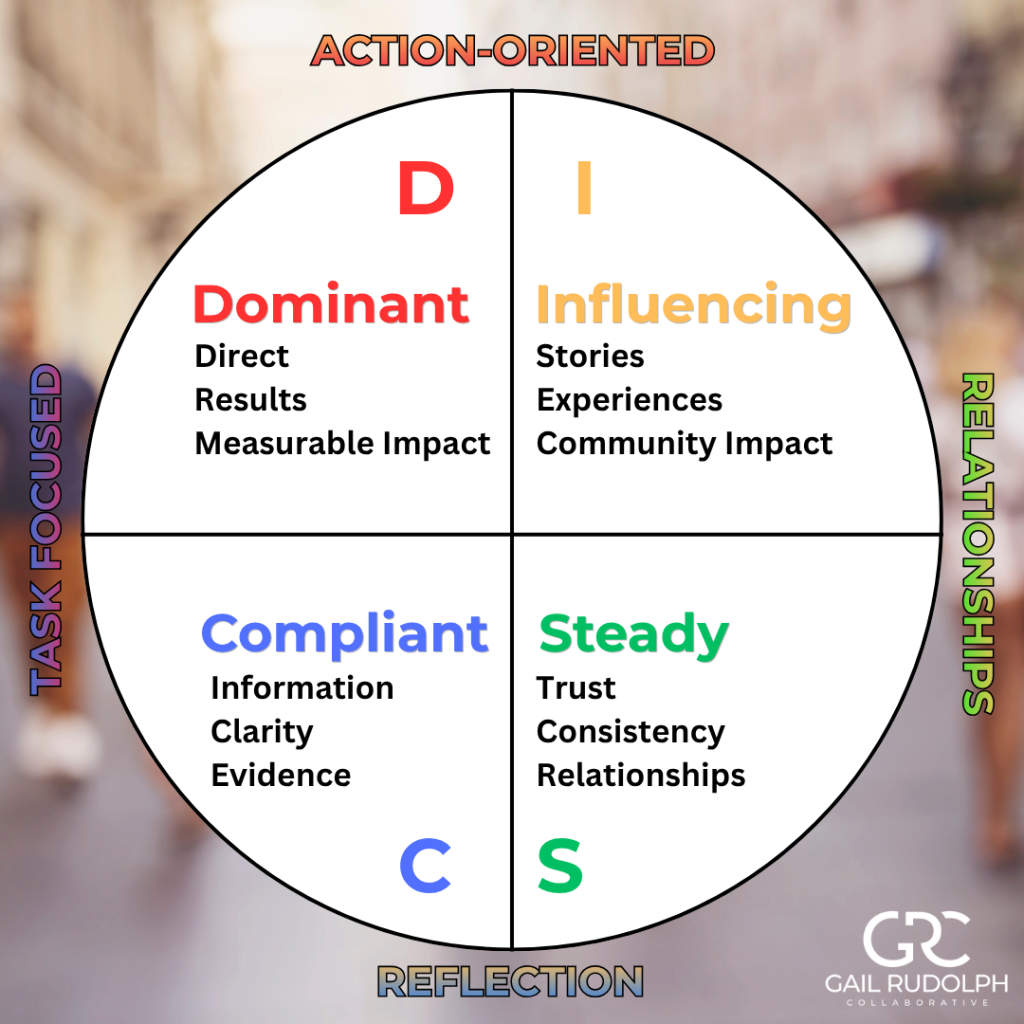
This is why one of the most useful tools I teach professionals is the DISC personality framework.
DISC helps us quickly identify how someone prefers to communicate, what motivates them, and how they tend to make decisions.
The beauty of DISC is that you don’t need months of interaction to begin identifying patterns. Often within a short conversation—or even by observing someone’s communication style—you can begin to recognize their natural tendencies.
And when you understand that, your ability to connect, influence, and lead improves dramatically.
The Four Decision-Making Styles
Dominant (D): The Bottom-Line Thinkers
Dominant personalities make up a relatively small percentage of the population, but they are often found in leadership or decision-making roles.
They are decisive, results-driven, and highly focused on outcomes.
When they evaluate a proposal—whether it’s a business solution, a philanthropic opportunity, or a leadership initiative—they typically ask themselves a few simple questions:
What will this accomplish?
How quickly will it work?
What results will it produce?
Dominant personalities value efficiency and clarity. Long explanations can actually reduce their interest.
If you’re communicating with a Dominant personality:
Be direct.
Focus on results.
Highlight measurable impact.
In sales, they want to see ROI.
In fundraising, they want to know exactly how their investment will change outcomes.
In leadership, they want to understand how a strategy will drive results.
The clearer you are about outcomes, the more engaged they become.
Influencing (I): The Social Connectors
Influencing personalities bring energy into the room.
They are enthusiastic, outgoing, and deeply motivated by people and connection.
For them, decisions are often driven by relationships and emotional engagement.
They respond strongly to:
Stories
Experiences
Community impact
When someone with an Influencing style supports a cause, buys a product, or embraces a leadership vision, it is often because they feel inspired by the people involved.
If you want to connect with an Influencing personality:
Share meaningful stories.
Highlight the human impact.
Create opportunities for interaction and engagement.
For them, influence often happens through relationships and shared purpose.
Steady (S): The Relationship Builders
Steady personalities represent the largest portion of the population.
They are loyal, dependable, and highly relationship oriented.
These are often the clients who stay with a company for years.
The donors who support an organization consistently.
The team members who create stability within a workplace.
Steady personalities value:
Trust
Consistency
Long-term relationships
They are less interested in fast decisions and more interested in reliable partnerships.
If you want to engage a Steady personality:
Build trust gradually.
Demonstrate appreciation.
Focus on long-term alignment.
When they believe in the relationship, their support often becomes incredibly consistent.
Compliant (C): The Analytical Thinkers
Compliant personalities approach decisions through careful analysis.
They want information.
They want clarity.
They want evidence.
Before making a decision, they often ask questions like:
What data supports this?
What results have been measured?
How do we know this will work?
If you’re communicating with a Compliant personality, bring:
Research
Metrics
Impact reports
Structured explanations
Transparency builds trust with analytical thinkers.
Once they feel confident in the information, they are very comfortable making thoughtful decisions.
Why This Matters
When professionals ignore personality differences, conversations often feel harder than they need to be.
But when we understand how people naturally process decisions, communication becomes easier and more productive.
In sales, this allows buyers to evaluate solutions with confidence.
In fundraising, it helps donors connect to a mission in ways that resonate with their motivations.
In leadership, it creates stronger teams because people feel understood and respected.
The most effective professionals don’t simply present ideas.
They adapt those ideas to the person sitting across from them.
And that is where real influence begins.
